Methods and Materials

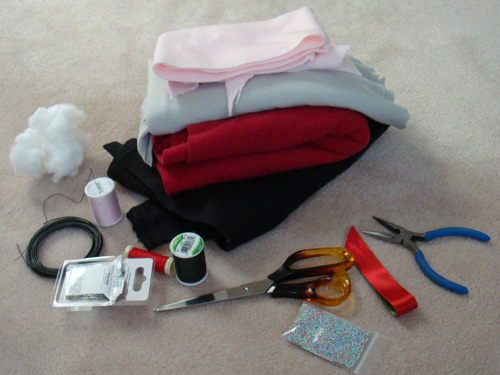
Things that you will need:

  • Fleece, or some other fabric, in the necessary colors. Try to get cloth that doesn't fray at the edges. Cloth is usually sold in bolts of 1 meter or more in width and you choose how much length you want. 20cm should be plenty for each color.
  • Thread in the necessary colors. All-purpose thread should do; try not to get stuff that's too thick or delicate.
  • Sharp scissors.
  • Sewing pins. They will make your life easier.
  • Sewing needles. Don't use ones that are too thick
  • Stuffing. Or, if you are cheap, you can spare the expense by using scraps of cloth (but you'll need a lot). Stuffing is often sold in large bags so you might not want to go out and buy some. Or you can dissect an old toy or pillow for their fluffy innards.
  • A ribbon for Mr. Saturn.
  • Wires for Mr. Saturn's hair and whisker. You'll want to consider the stiffness of the wires and whether or not they'll poke your eye out before select one to use. Please read through the tutorial first to get a feel for what you need.
  • Wire cutters and pliers if you're working with wires.

    Optional stuff:

  • Sewing machine. If you know how to use one and what parts are appropriate for using it, then be my guest. I personally don't use them.
  • Needle threader. Ham-handed gamers might have a problem threading a needle, but this nifty tool makes the job easy. You first push the wire part of the threader through the needle's eye, and then take one end of your string and thread it through the loop of wire. Then you pull the threader back through the eye of the needle, and it will take the string through the eye.
  • Eyes for Mr. Saturn. If you are lucky enough to have nice doll eyes for Mr. Saturn, you can use those. Or buttons. But you can just use a scrap of black fabric and have it work well enough.
  • Black fabric paint. If you don't feel like sewing on the black portions of each plushie, you can simply draw them on.
  • Beads/seeds/rice/sand for Starman's feet. I like my Starman's feet to have a bit of weight so I stuff it with something heavier than stuffing. If you do it right, it can even stand by itself!

    The patterns

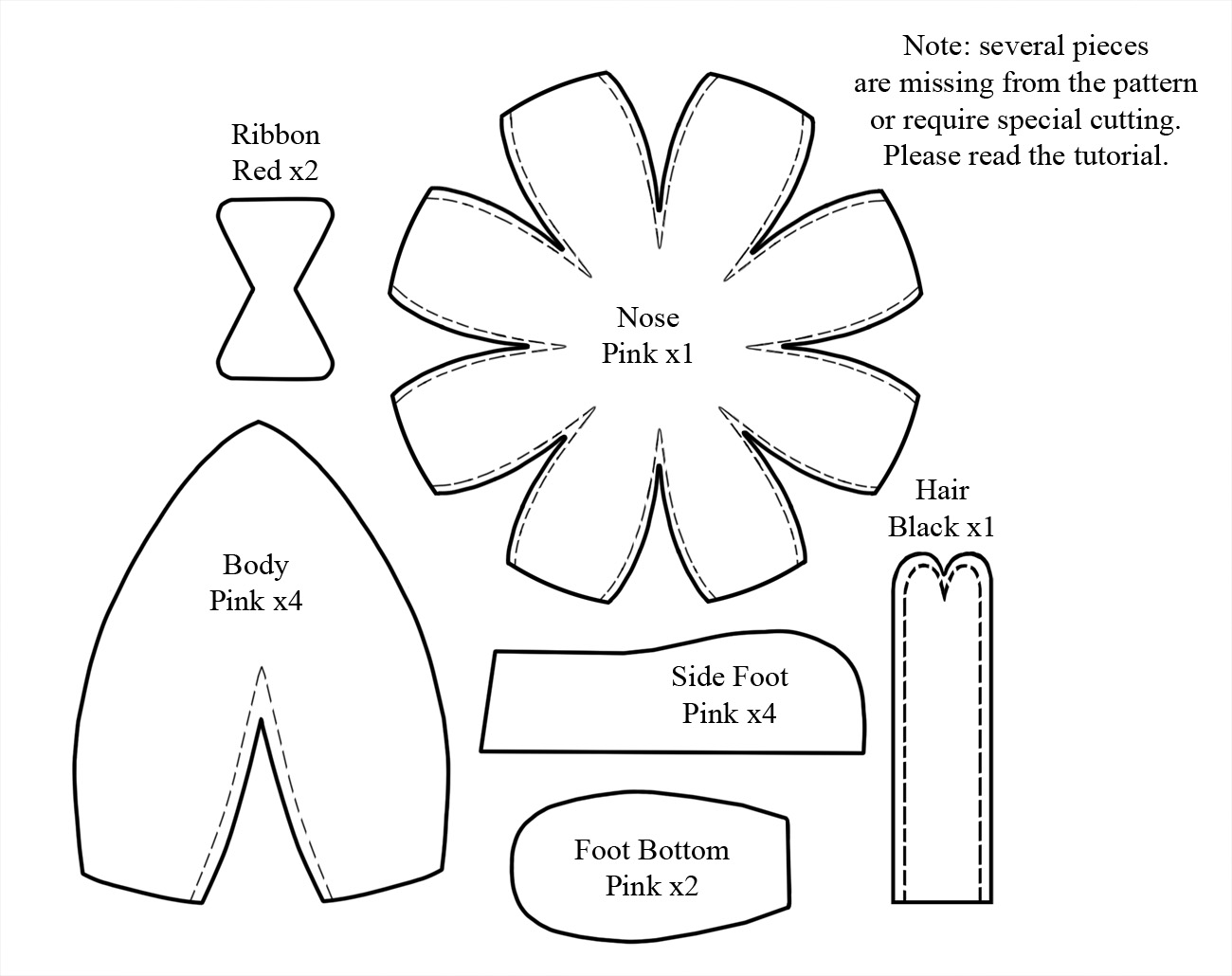
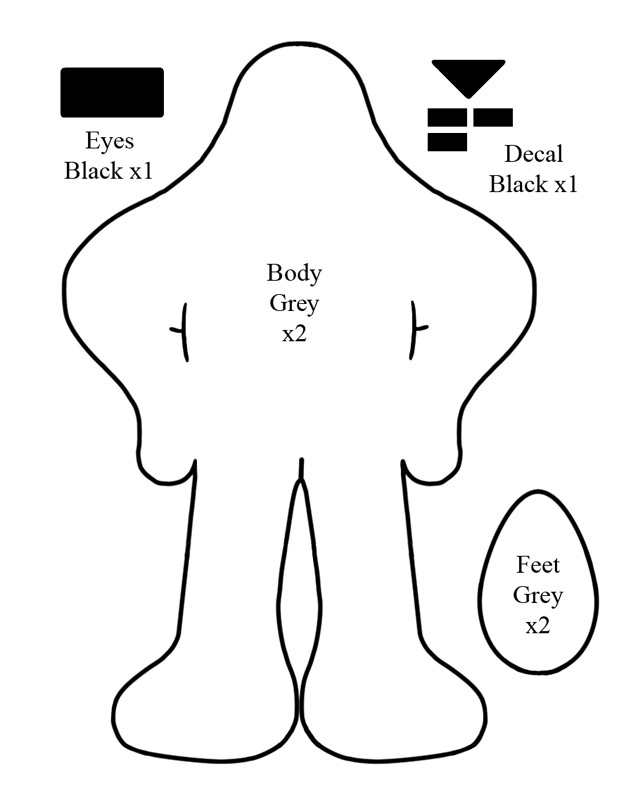
    I've provided the sewing patterns here in .JPG form. It's recommended that you resize the image and print it out to your desired size. For reference as to how I prefer it, the Mr. Saturn 'nose' circle is about 7 inches in diameter and the Starman's 'feet' pieces are 1.5 inches across the shortest length. The solid lines you cut along and the dotted lines (if they are there) provide suggestions as to where the some of the pieces are supposed to be sewn. The color of each piece and how many you should cut are also provided. There may be a few pieces missing from the pattern but I will explain how to deal with them in the tutorial.

    Note: Do not cut any cloth pieces at this point as some are optional and some require special cutting. Read through the instructions first.

    Also note: The patterns and instructions in these tutorials do not exactly reflect what is seen in the example photographs. That's because the photos taken were of the plushies as I was experimenting with them, and so some things look a bit crude and and inefficient. Therefore, please use the photos as a general guide, not as something to compare your progress with exactly.

    MR. SATURN PATTERN

    STARMAN PATTERN

    How to sew!

    Firstly, note that there is often a 'good' side and a 'bad' side to cloth. The two sides have a different quality to them. This matters because if you don't pay attention to it, the resulting plushie will look patchy and inconsistent. Usually, you'll want only the good side of the cloth to be showing on the plushie surface. So which side is good and which is bad? So long as you are consistent, it doesn't really matter.


    To prepare your string and needle, thread your string through the needle and match up the two ends. Then tie the two ends in a knot with about 1 cm of tail or more remaining. Tie another knot on top of the first knot to make it thicker. You'll need the knot to be thick enough so it doesn't pass right through the cloth. You will want to use about an arm's length worth of thread each time because any longer and it'll get easily tangled.


    I'll be referring to this as the 'basic stitch'. It is used when two pieces of cloth are placed together. Simply poke the needle through both pieces of cloth and slowly pull the string taut. Don't pull too tightly though; you don't want an 'accordion' effect on your cloth. Then, on the side which the needle emerged from, poke the needle through again. Rinse and repeat. Usually, you stitch following the edge of the cloth, keeping about half a centimeter of space between the seam and the edge. The smaller you make each stitch, the better the end results will be.


    I'll call this move the 'whipstitch' (although it's technically not the whipstitch). It's used when one piece of cloth needs to be sewn directly onto another piece. First, pass the needle through the 'back' or 'inner' side of whatever you're sewing so that the knot is not anywhere visible. Also pass the needle through the edge of the second piece of cloth. Then, pass the needle through to the back end of your first cloth piece, but not the second one. Repeat. It's important to keep the stitches small and neat because they will be showing on the outside of the finished plush.


    This is called the 'Ladder stitch'. If done properly, it hides the thread within the cloth. It achieves almost the same effect as the basic stitch but instead of sewing on the inside of the plushie, you are sewing on the outside. It's perfect for sewing up openings that are used for stuffing. It's used when there are two pieces of cloth that are folded inwards, with their folds needing to be connected. First, poke your threaded and knotted needle through the inside (or 'bad' side) of one cloth, ensuring that the knot is on the inside of the plushie. Next, pass the needle through the outside (or 'good' side) of the other piece of cloth at the closest location where the pieces meet. Don't pull the thread too tightly; you'll need space to perform the next step. Now that your needle is on the inside of the plushie again, pass it through to the outside. Repeat. Remember to pull the earlier stitches tight at some point, once you don't need the wiggle room.


    When you finish sewing a section or run out of thread, you'll want to end the string in a knot. To do that, first find one of your previous stitches. If possible, try to choose one that is on the 'inside' of the final product so that the knot doesn't show on the outside. Now pass the needle through the stitch, but don't pull on it tightly. Pass your needle through the loop you just made. Now pull on it carefully, working the knot as close to the cloth as possible until you can't pull anymore. Do this again using the same stitch you first used. You should have a tight knot. Now snip off the remaining thread, leaving about 1 cm of tail. If your knot is on the 'outside' of the plushie, then you can hide the tail of the thread by poking your needle through the cloth near your knot and then taking it out at a farther location. Then snip the tail close to the cloth so that none of it is showing on the outside.

    Onto Mr. Saturn tutorial!

    Onto Starman tutorial!!

    Back to Plushie main page